


As the new City Hall opened in 2013, 2014 would prove to be a pivotal year for the city: downtown planning, a major project downtown, the formation of new community groups, a growing focus on the arts, and the addition of a massive amount of greenspace.
Analyzing Productivity of Land
While the City celebrated its 75th anniversary, major planning efforts were underway to update the master plan for downtown as the effects of the Great Recession were finally in the rearview mirror.
Part of that included participation by the City in the Gwinnett Chamber’s Redevelopment Forum at the end of 2013. At that Redevelopment Forum, a highly informative and thought provoking report was presented. “The Dollars and Cents of Smart Redevelopment” by Joe Minicozzi was presented. The City highlighted the report in the December 2013 issue of the Sugar Hill Sentinel.
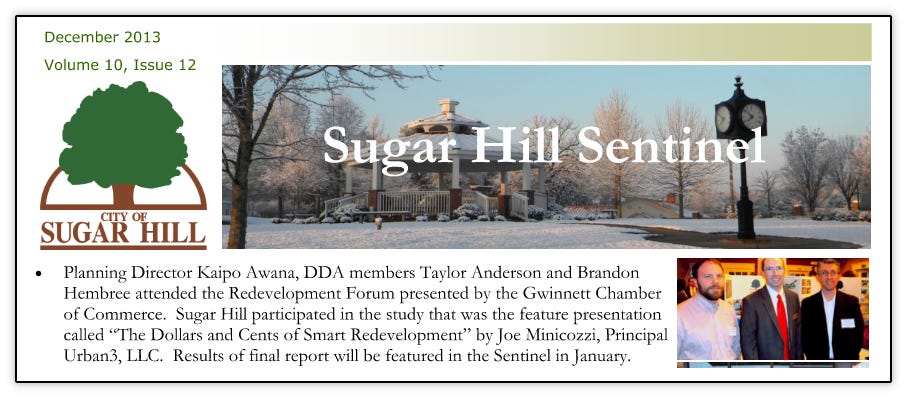
While the story in the Sugar Hill Sentinel indicated a future report on the final results, that didn’t happen. Minicozzi’s report itself opened a lot of eyes to the cost, perhaps better said the lack of productive value, of traditional, auto-oriented suburban development. The entire report is linked below and worth the read.
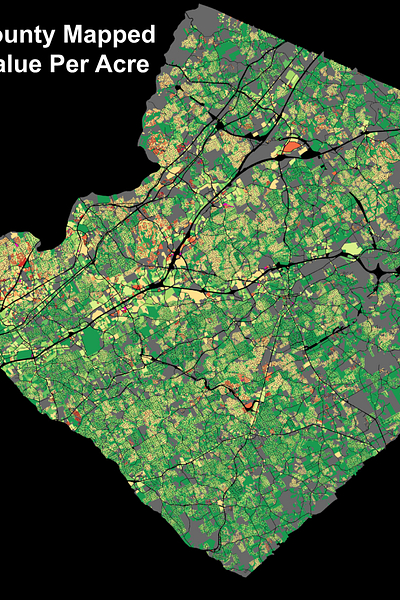
The main point in the report is how a community looks at assessed value of property on a per acre basis, allowing for an apples to apples comparison of the productivity of developed land. A portion of it specifically focused on Suwanee and the productivity of Town Center against the rest of the city.
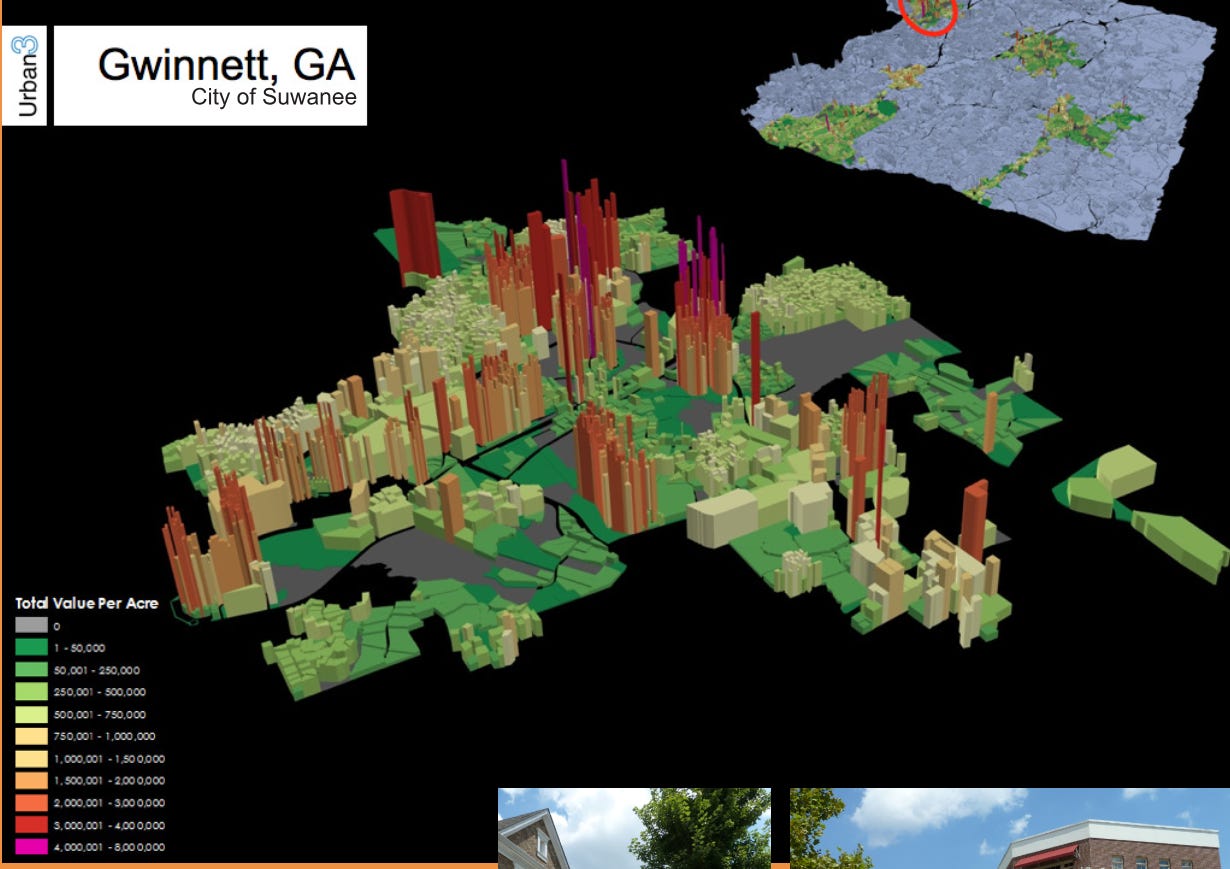
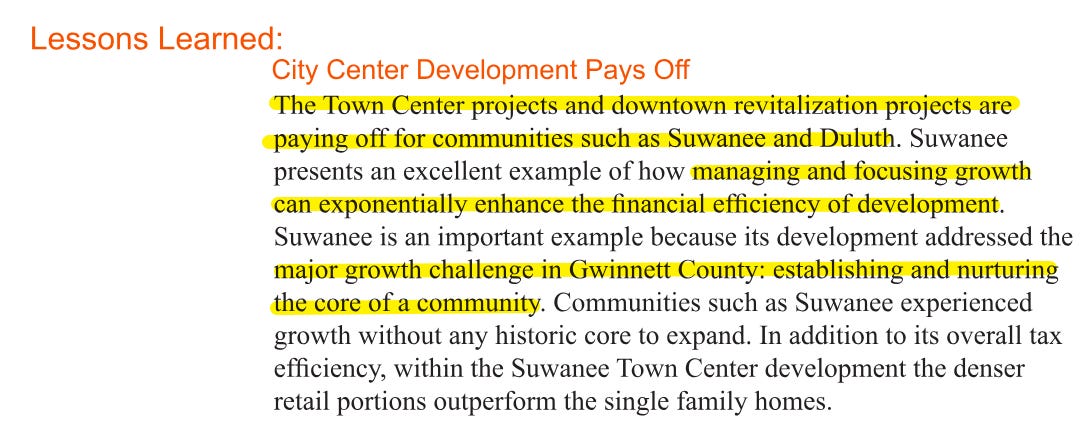
The success of the then only 8-year old Town Center (which only included the mixed-use development around Town Center Park and the neighboring townhomes and single-family subdivision at that time) was specifically highlighted.
To make the financial productivity of downtowns crystal clear, this comparison was made regarding the parcel that includes the old “Bank of Buford” building in historic downtown Buford to the then relatively new “Sugarloaf Mills Mall” near Georgia Hwy 120 and I-85.
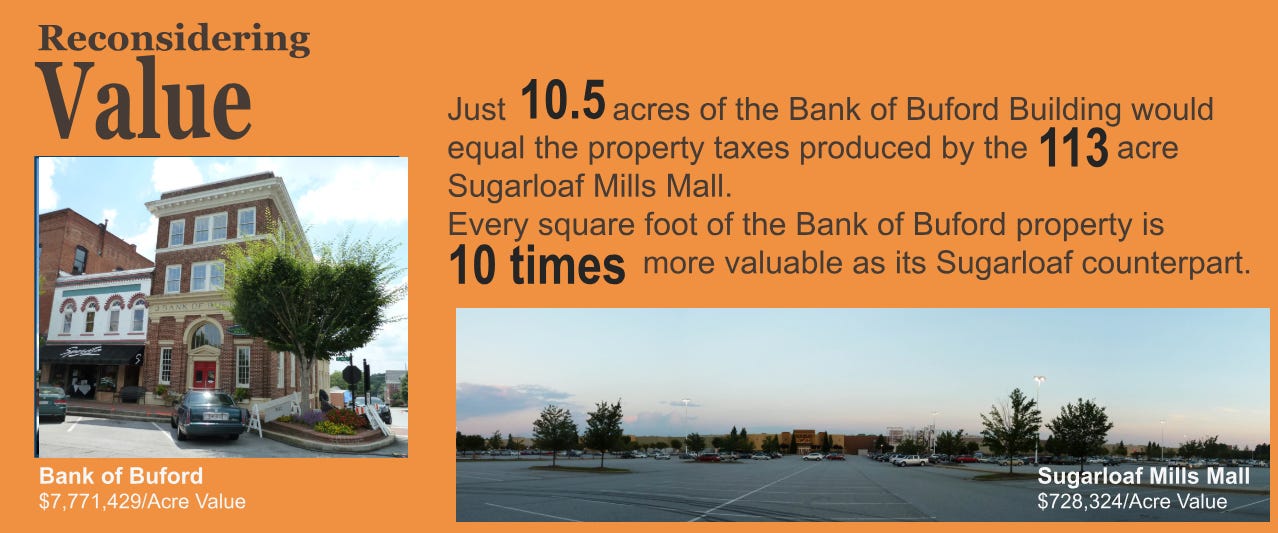
Remember, this is based on 2013 valuations.
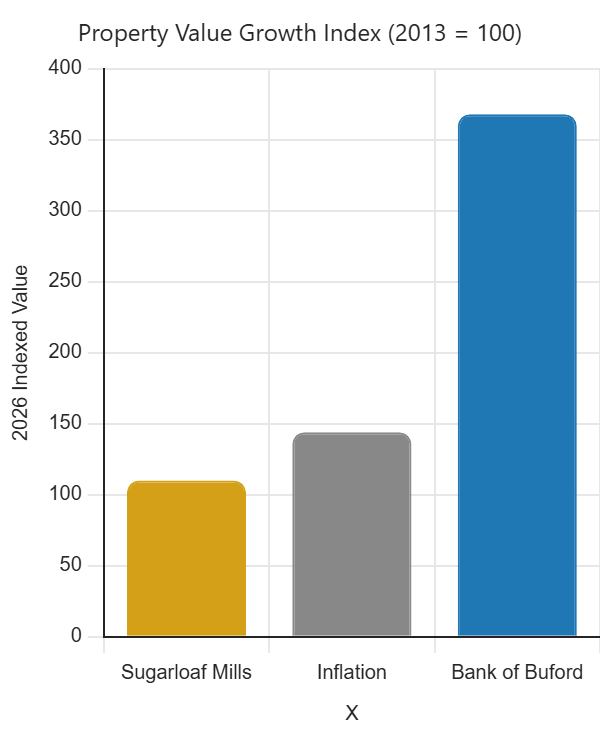
Curious what that comparison would be in 2026 valuations? Sugarloaf Mills Mall is currently valued at $796,460/acre. The Bank of Buford parcel (which is now a salon) is currently valued at $20,833,333 per acre. Yes - you’ve read that correctly. In 13 years, the Sugarloaf Mills Mall property value has increased at total of 10%. Meanwhile, the Bank of Buford property value has increased 268%. Inflation over that time period from 2013-2026 was 44%. (Valuations based on Gwinnett County Tax Assessor “total appraised” values in 2013 and 2026.)
In 2013 you needed just 10.5 acres of Bank of Buford Development to equal the value of the 113 acres at Sugarloaf Mills Mall. By 2026, the number had fallen to a mere 4.3 acres of Bank of Buford development to equal the entire value of the 113 acres at Sugarloaf Mills Mall.
The chart below gives a visual comparison.
In a future article, we’ll use this equation to compare downtown developments and parcel values to places like malls, Wal-Marts, other big box retail developments and traditional suburban garden style apartments.
This very straightforward math in 2013 led many to one obvious conclusion - the analysis suggested that fiscally productive downtown development would play an increasingly important role in the long-term financial health of local governments. Focusing on walkable, mixed-use and people-oriented development like the towns of old over the traditional suburban automobile dependent development was the future. And real numbers 13 years later show that this conclusion would be strongly supported by the available evidence.
Plan Updates and Void Analysis
The first planning effort the Downtown Development Authority (DDA) in 2014 was to engage a consultant to prepare a void analysis and master plan update - the first major downtown planning focus since 2005. A void analysis is a report of the missing type of development in the community - in other words, what was the market demanding but not supplying? The DDA and City Council wanted to ensure that plans were based in market reality - not pie in the sky aspirations. It also was pursuing a master plan update. The Request for Qualification (RFQ) was published in February 2014.

The selected consultant was Bleakley Advisory Group. They would go on to do the analysis and prepare the master plan update. The update would be an incredible look into the possibilities of downtown and lay the groundwork for the next decade of growth in downtown.
In March, the City hosted a joint training workshop of Mayor and Council, the DDA, Planning Commission and City staff workshopping on downtown development - what community initiated development would look like. It was highlighted in the April Sugar Hill Sentinel.
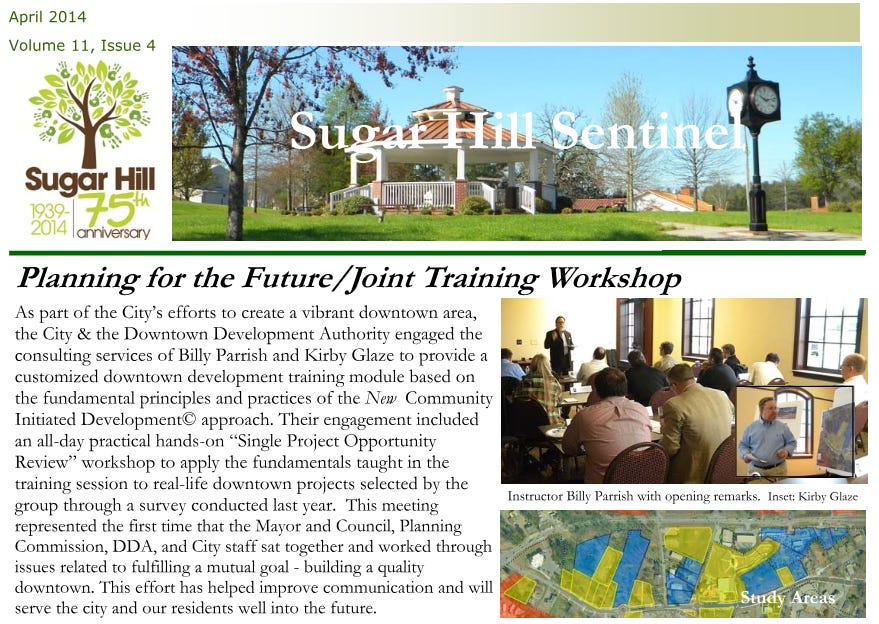
Most importantly, it led to elected officials, planners, downtown leaders, and staff all operating from the same playbook as major redevelopment decisions approached. It was a seminal moment for the future of the City.
Downtown’s First Redevelopment: Old City Hall to Business Incubator
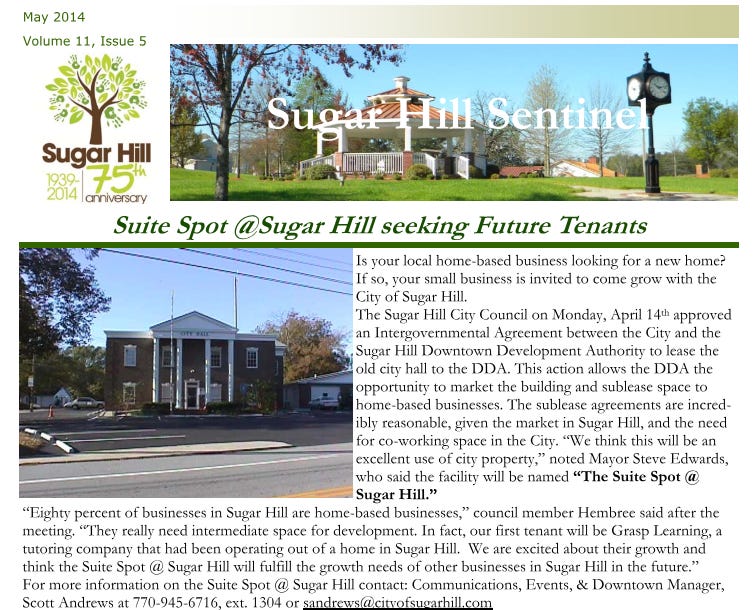
In April, the DDA would announce one of its most ambitious plans to date - the conversion of old city hall into The Suite Spot - a business incubator. The Suite Spot would become a welcome new home for dozens of small businesses over the next decade.
Sugar Hill’s First Downtown Manager
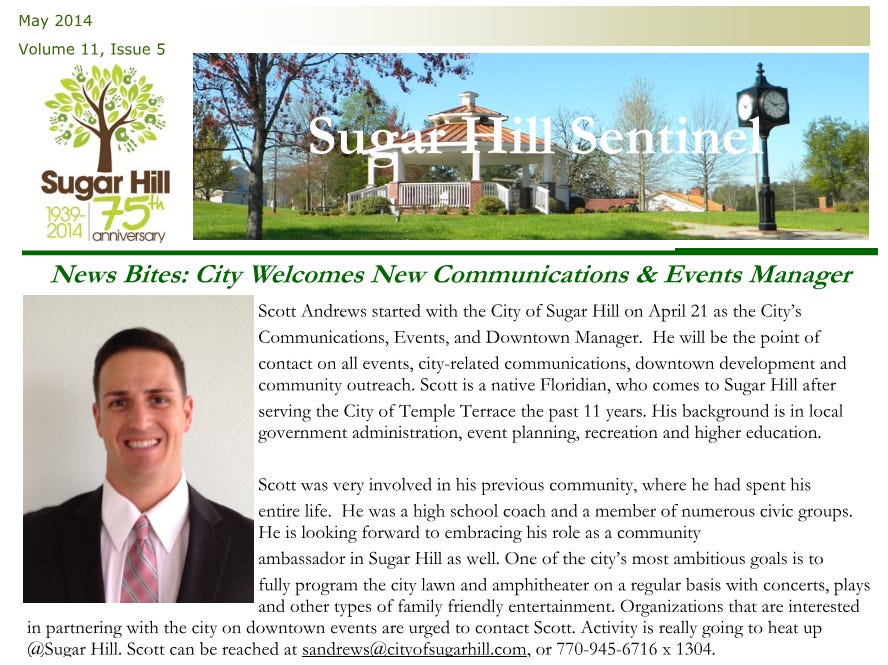
April would also welcome the highly energetic Scott Andrews to the City of Sugar Hill. Scott would become a staff force during the next three and a half years for moving projects forward through his energy and drive to make Sugar Hill successful.
GA Highway 20 Widening
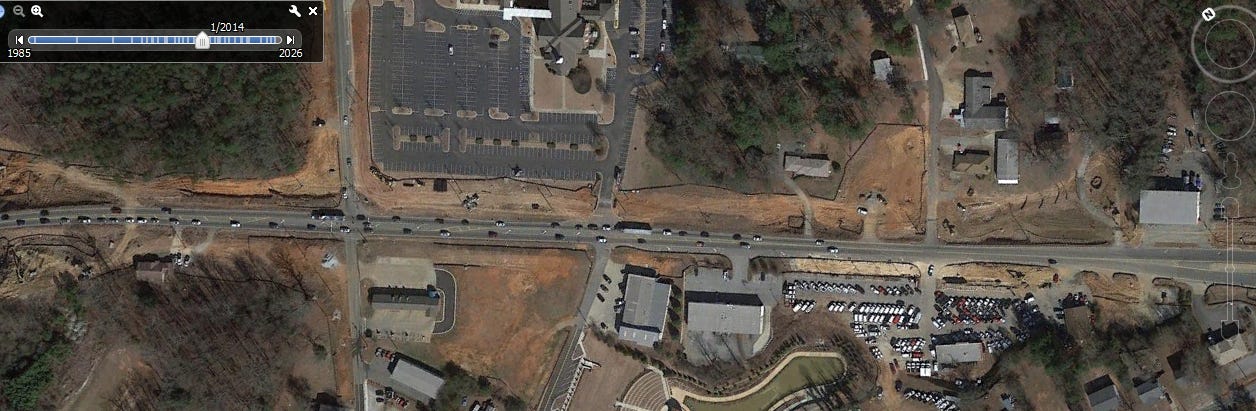
Meanwhile, one of the most impactful projects in Sugar Hill’s history was getting underway - the widening of Georgia Hwy 20 by the Georgia Department of Transportation and Gwinnett County. It would widen the existing two lanes to four lanes between Peachtree Industrial Boulevard and the Chattahoochee River. Clearing of the right-of-way had started in 2013 and the evidence of the widening became much more of a reality in 2014.
The City’s Transformative Project: The E Center
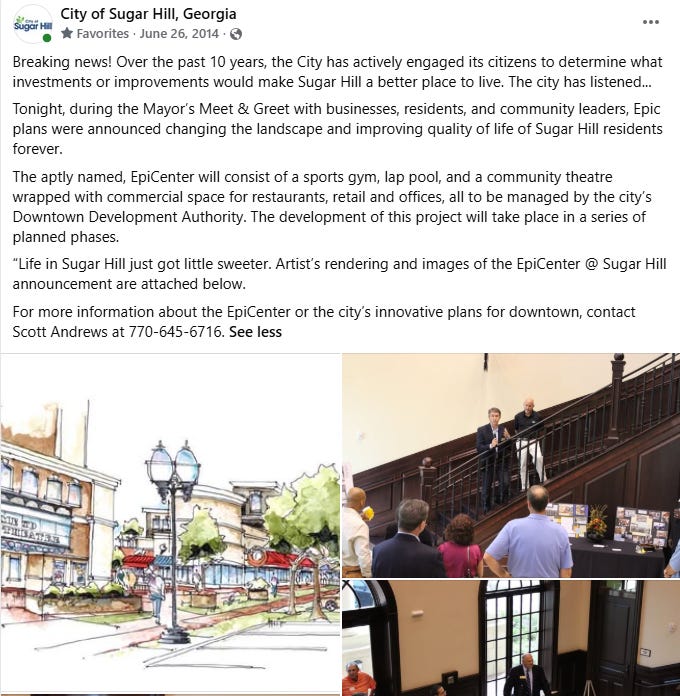
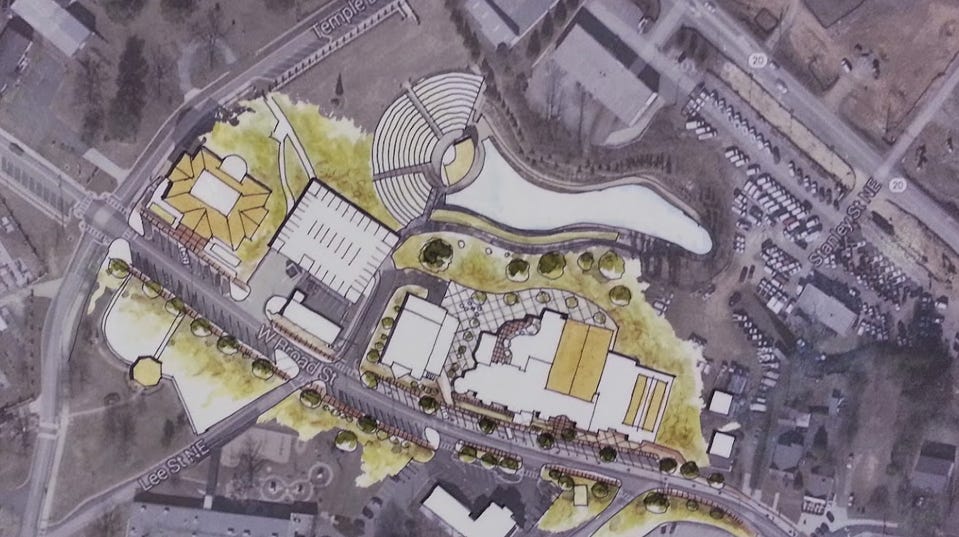
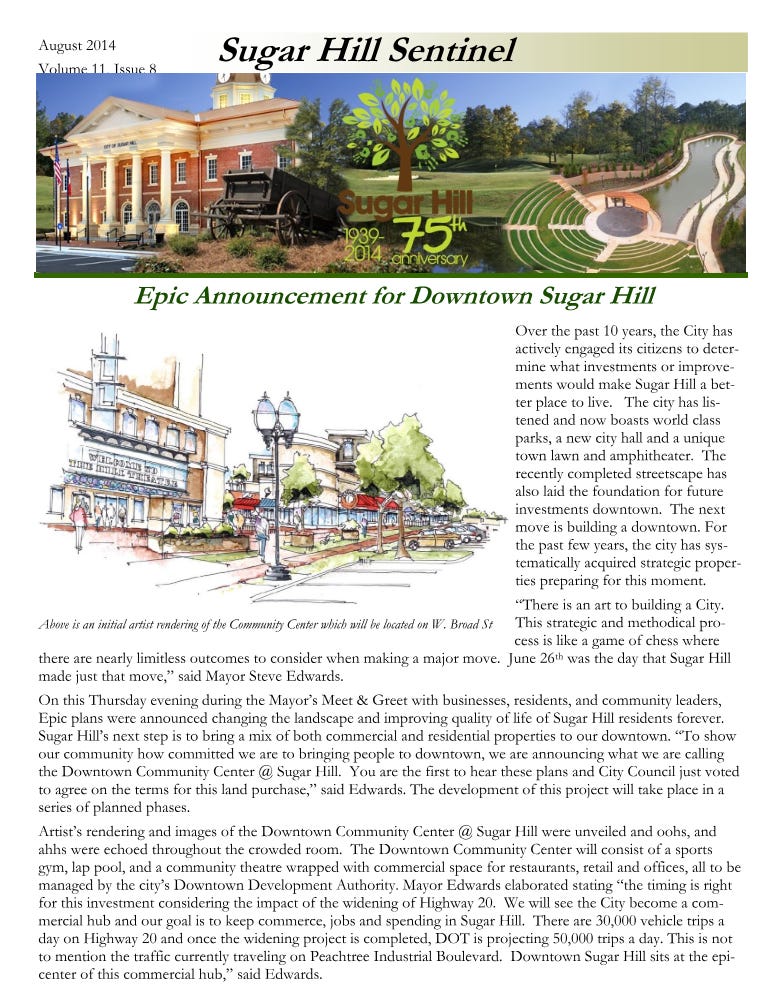
Just prior to the final release of the Master Plan Update, in June, the City would make the announcement of the transformative E Center (initially called EpiCenter) project in downtown. The E Center would be the catalyst project for the future of downtown, combining a theatre, gymnasium and private commercial space into one footprint. The E Center wouldn’t open for another 4 years, but the announcement set the stage and provided the momentum for downtown’s future growth.
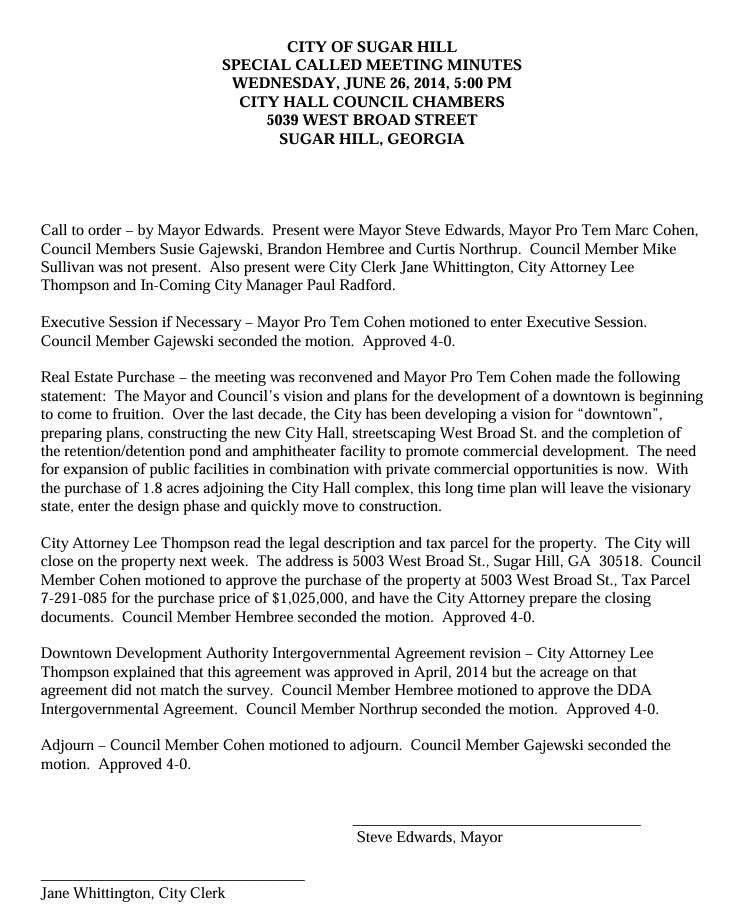
This was announced after a special called meeting of Mayor and Council on the same day in which the adjoining 1.8 acres next to City Hall was formally voted on for purchase.
Master Plan Update Complete
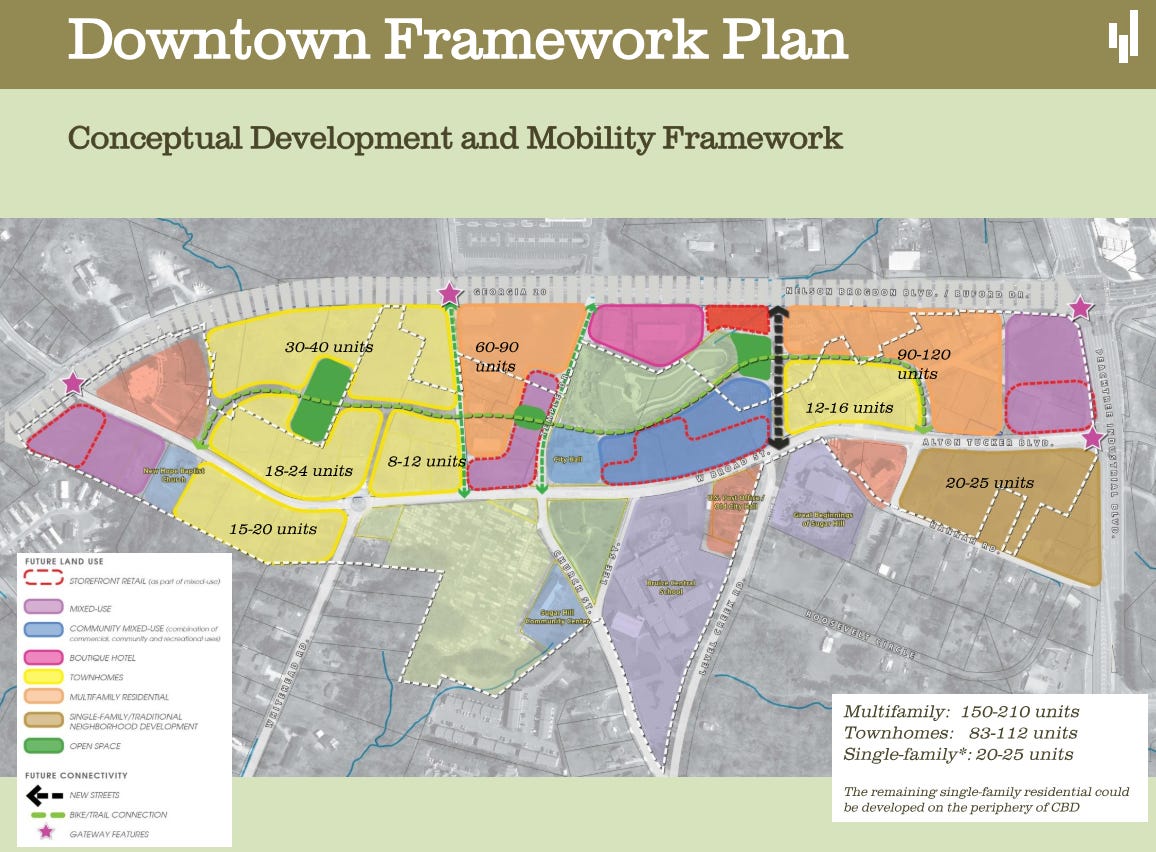
Meanwhile, the final version of the void analysis and updated downtown master plan was released in August. This plan pulled together a tremendous amount of market data to inform the plan for downtown, including a “bubble plan” to show potential development throughout the Central Business District (CBD).
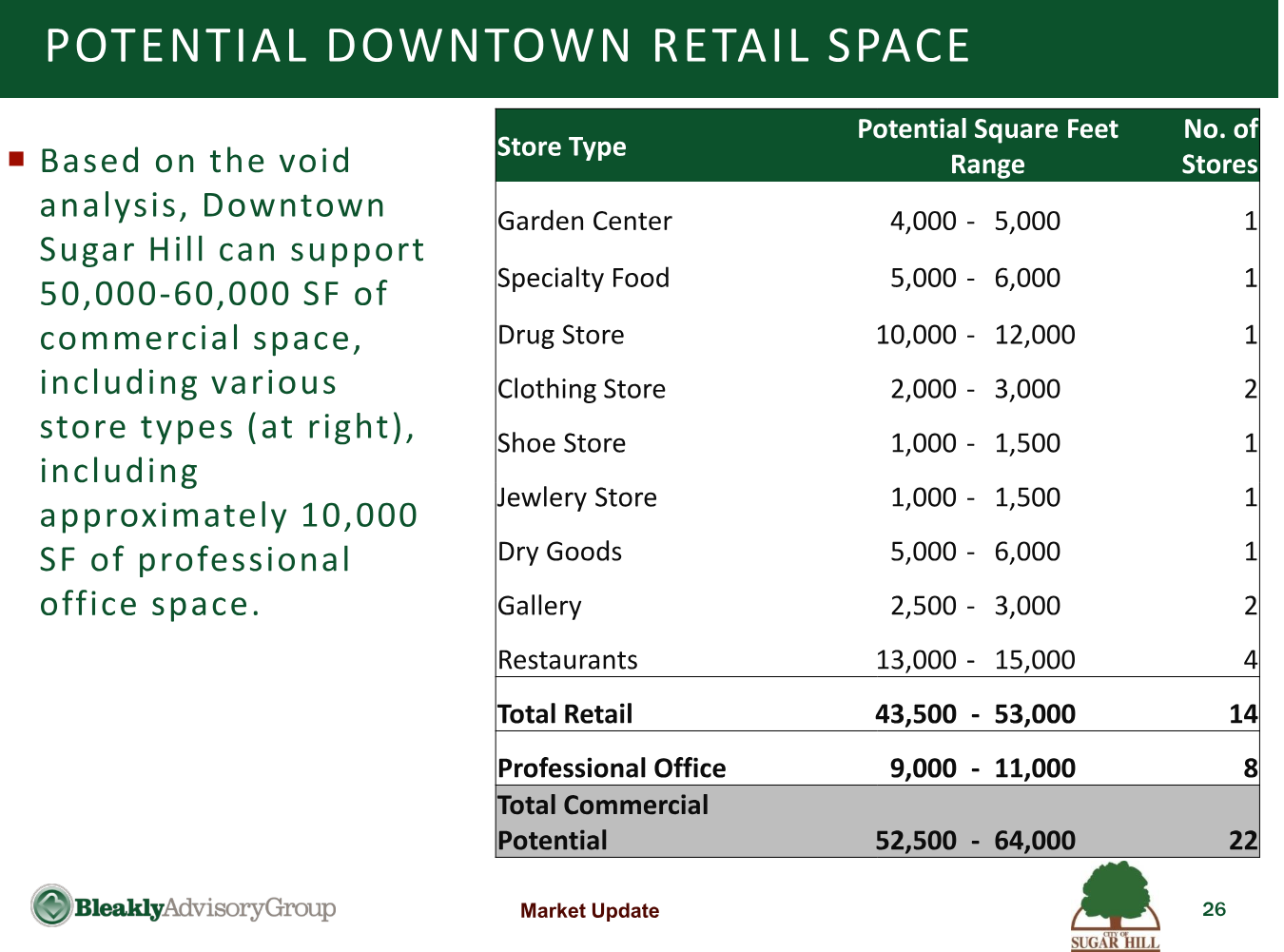
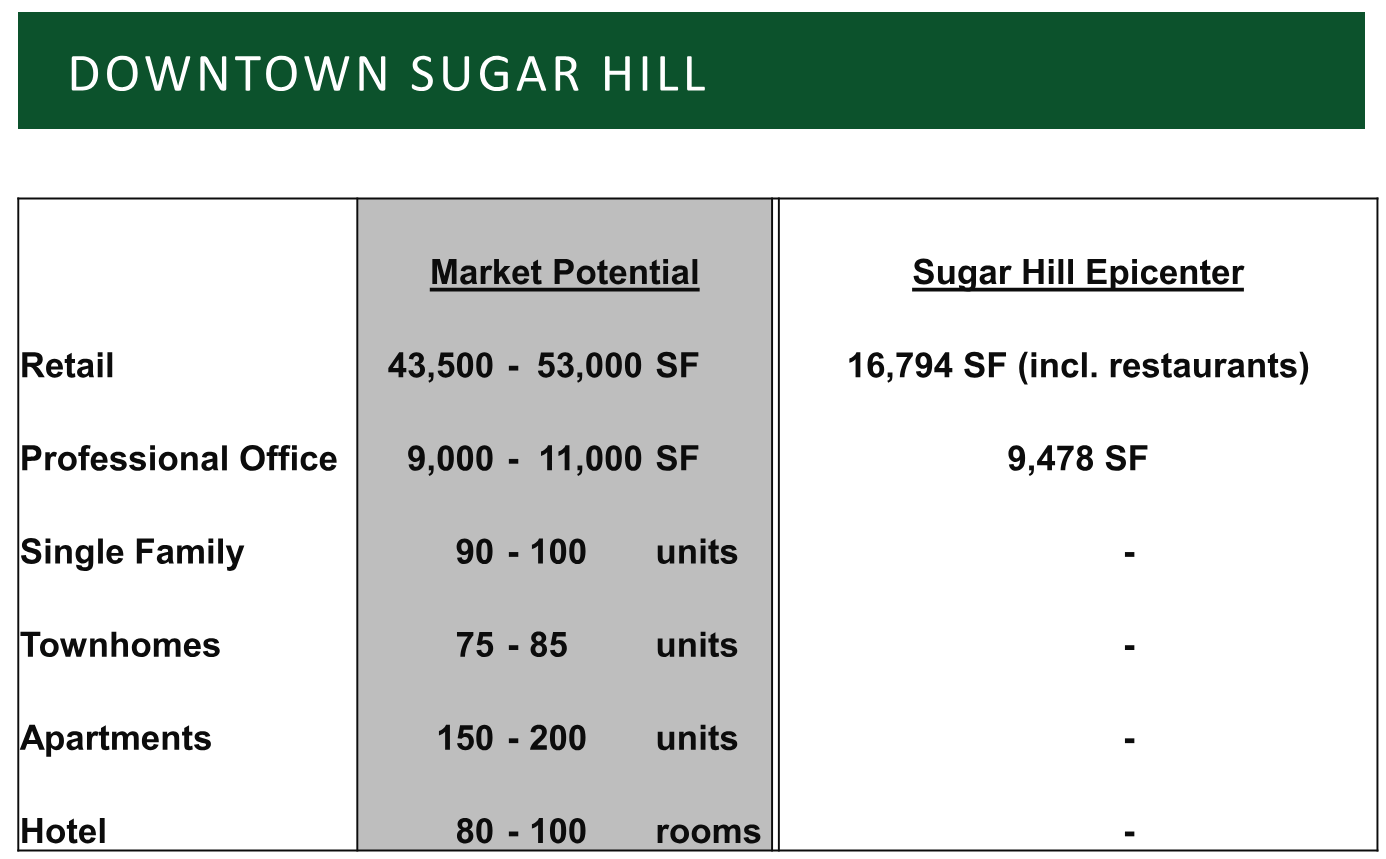
The void analysis showed a potential demand at the time for up to 64,000 square feet of commercial demand.
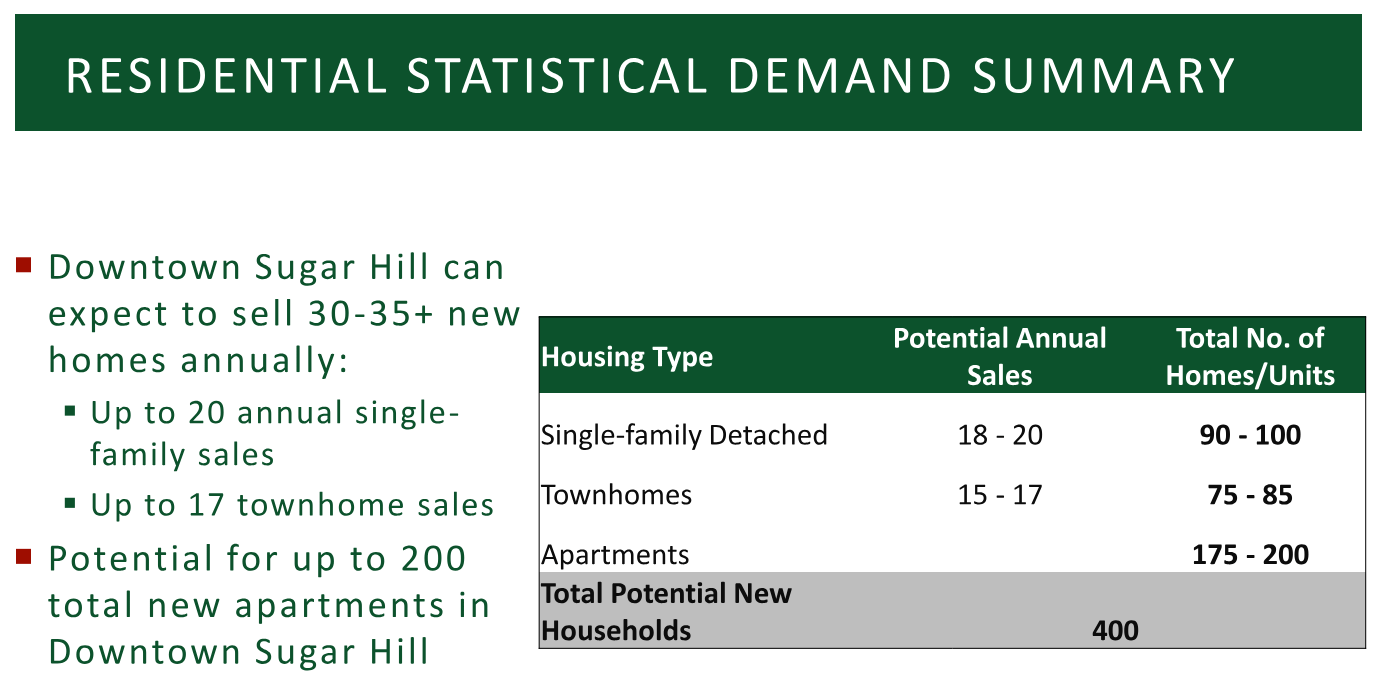
The void analysis also showed strong demand for housing - despite there still being a backlog of available homes from the Great Recession.
The void analysis also included a chart showing how the E Center would meet some of the demand.
The “bubble plan” gave a general framework for what downtown could be within the CBD.
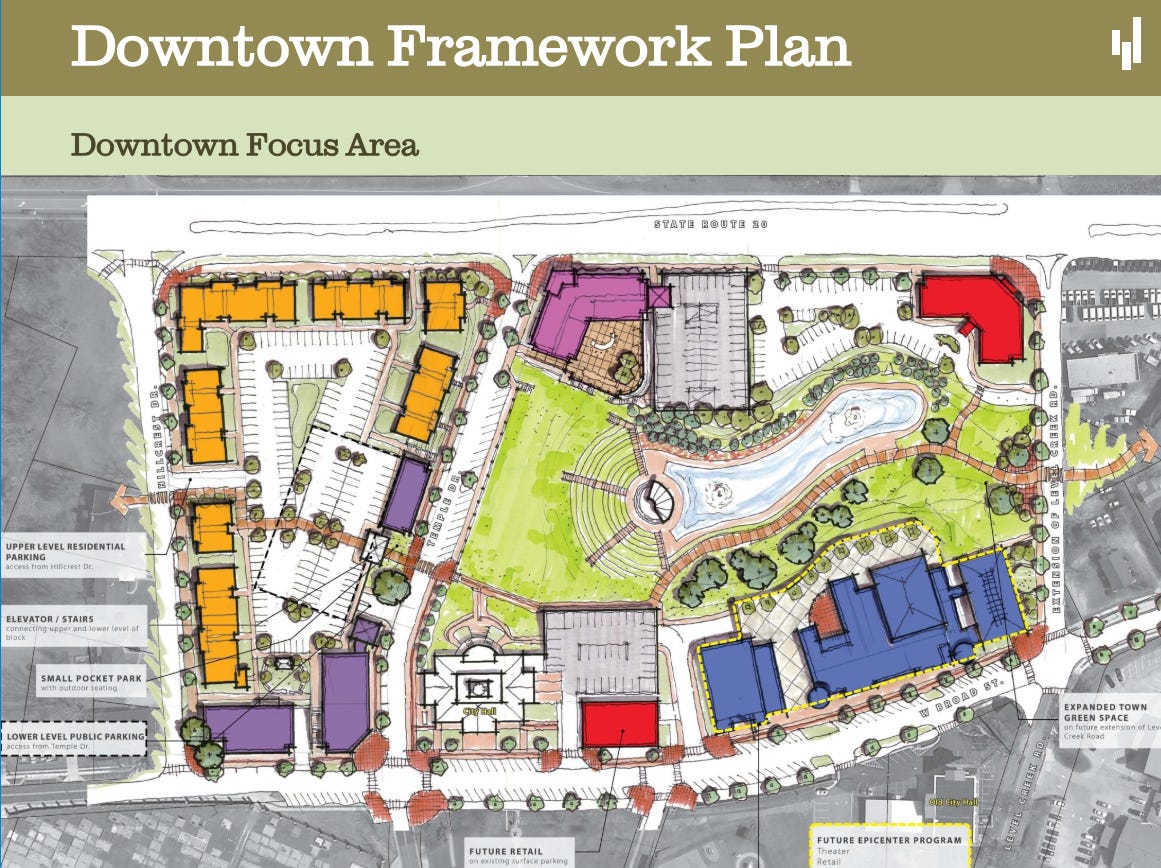
Finally, the updated Master Plan included more detail within the City Hall block - including the development of the surface parking lot into a retail/office building which was approved earlier this year.
The 2014 Master Plan would be updated again in 2017 with even more detail, but the 2014 plan would be the bones that would propel downtown even further into reality.
Other Important 2014 Additions and Changes
2014 wasn’t just about downtown - it was also about massive increases in community involvement, the arts and green space initiatives.
The Players Guild is started and presents its first live show “And Then There Were None” by Agatha Christie in September.
The Arts Commission is formed.
The Broad Street Band is formed.
The Youth Council is formed.
The Ice Rink makes its first appearance.
The Bowl hosts its first major, ticketed concert for the 75th anniversary celebration on August 2nd. The headliner was The Bacon Brothers. Can you name the other two acts that performed at that event? (It was Haley & Alexis and Andy Velo.)
EE Robinson Park was sold to Gwinnett County in November for continued use as a park for $10 million. The money from the sale of the park would be used for other city related assets, including land for new parks, greenspace (for example, see the next bullet point) and the E Center. Critically, the park continued to function as it always had with the maintenance of the park more equitably spread across City and unincorporated users. A huge financial win for the City while maintaining the uses the park as it had been.
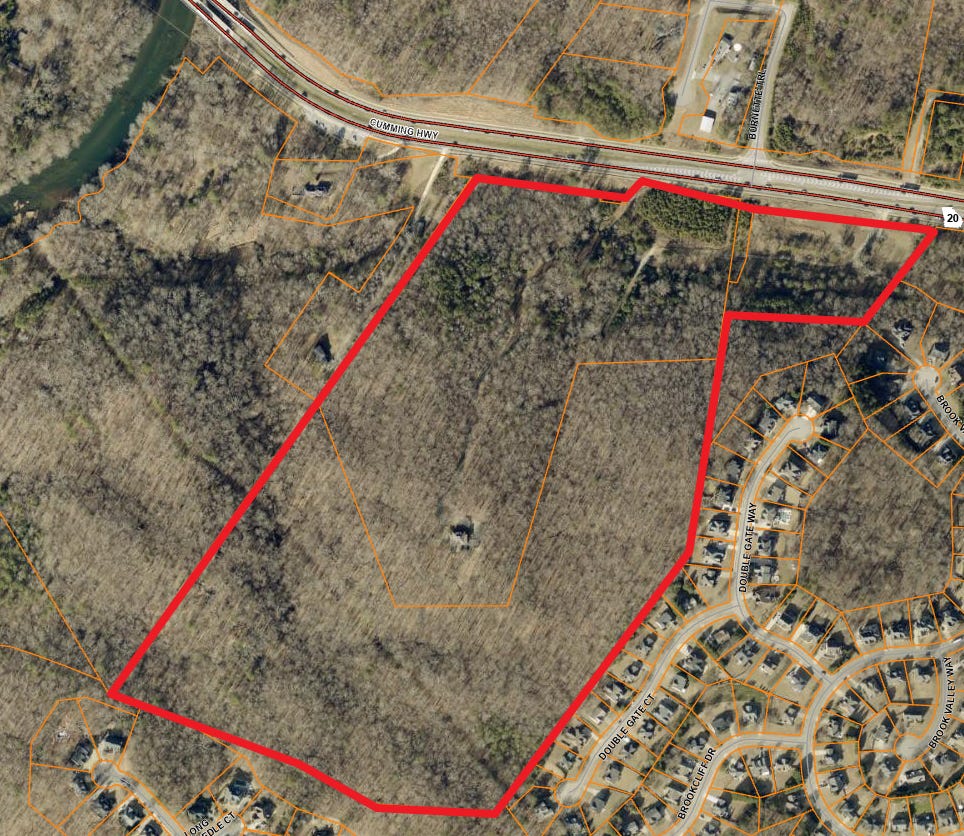
In December, the City purchased the 71-acres bordering the National Park Service’s property along the Chattahoochee River for $1.5 million. Those 71-acres would become the south property under the umbrella of the Riverlands Authority that would be created 8 years later.
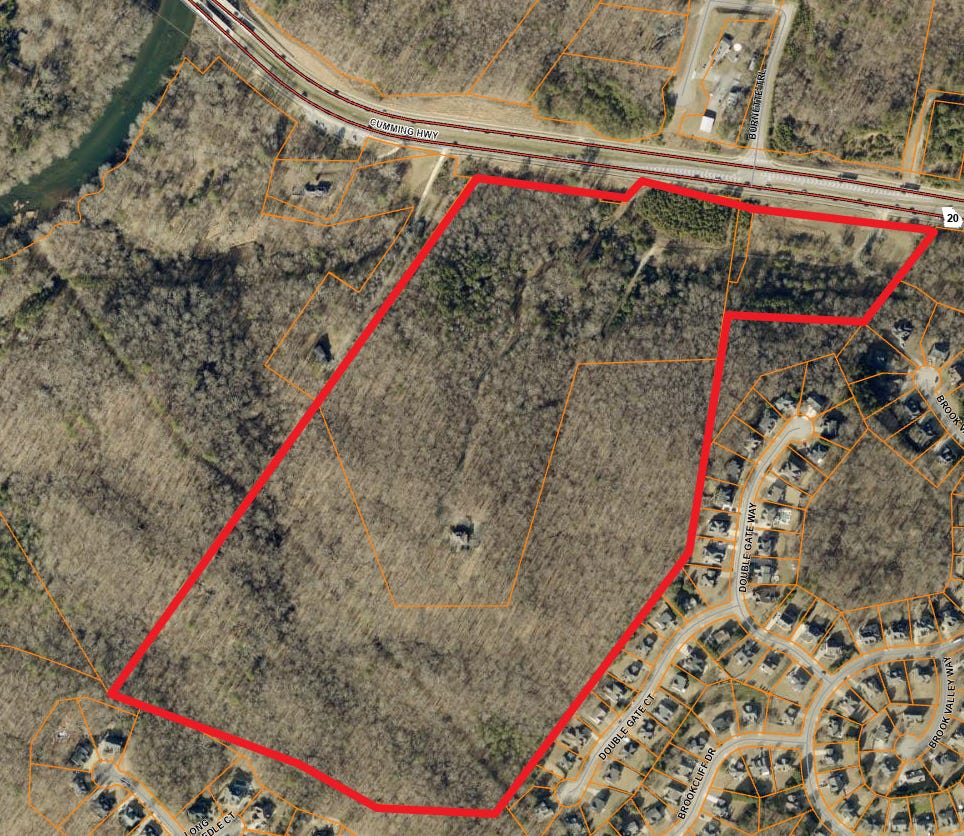
Map of the 71 acres that the City purchased south of GA Hwy 20 near the Chattahoochee River. The National Park Service owns the property to the west, Twin Creeks subdivision is to the east and Wild Timber subdivision is to the south.
A Year for The History Books
What makes 2014 remarkable is not simply the number of projects launched, but how many proved successful. The underlying belief that walkable mixed-use development would create stronger fiscal outcomes than conventional suburban growth has been validated by the numbers. At the same time, investments in arts, recreation, community organizations, and greenspace helped ensure that downtown would become more than an economic center. It would become the community’s gathering place.
Some may not necessarily have shared the City’s optimism in 2014. The E Center, downtown redevelopment strategy, land acquisitions, and broader investments represented significant commitments of public resources. Reasonable residents could disagree about the risks, costs, and proper role of local government in pursuing such an ambitious vision. What makes 2014 noteworthy is that many of the assumptions underlying those decisions can now be evaluated against the results that followed.
Looking back, the significance of 2014 was not simply that plans were prepared or projects announced. Communities across the country produced similar studies and visions following the Great Recession. What makes 2014, the City’s 75th anniversary, noteworthy is how much of that vision was ultimately implemented. The plans developed that year became actions, and the actions produced measurable changes that continue to shape Sugar Hill today. It matched the new Mayor’s “Go Big or Go Home” vision that he would push for the next eight years.
The City made a massive, strategic bet in 2014, and twelve years later we enjoy the successes of planning and executing on a Strong Community.